
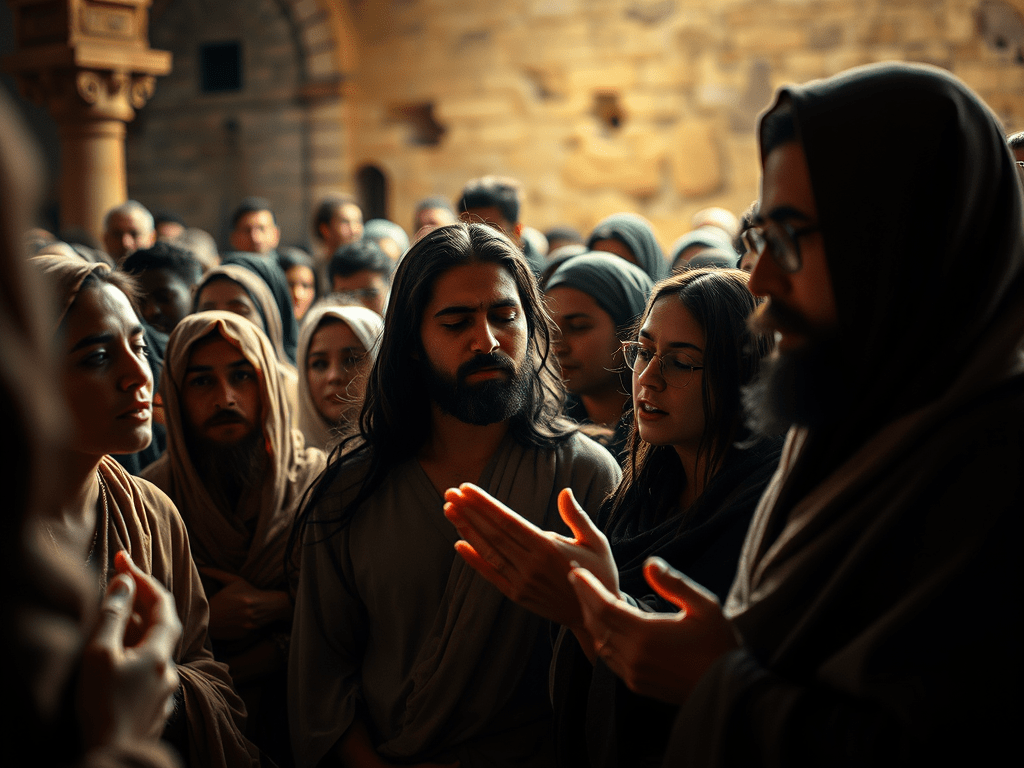
In the days following Jesus’ ascension, a small group of believers found themselves in a unique position. They had witnessed the miraculous resurrection of their Lord, received His final instructions, and now waited expectantly for the promised Holy Spirit. This period of waiting could have been passive, but instead, it became a powerful example of how to prepare for God’s next move in our lives.
The early disciples, about 120 in number, gathered together in Jerusalem. Among them were the eleven apostles, several women who had followed Jesus, and even His mother Mary and brothers. This diverse group, once scattered and afraid, was now united in purpose and faith.
Their approach during this interim period offers us three crucial lessons for our own spiritual journeys:
1. Rooted in Prayer
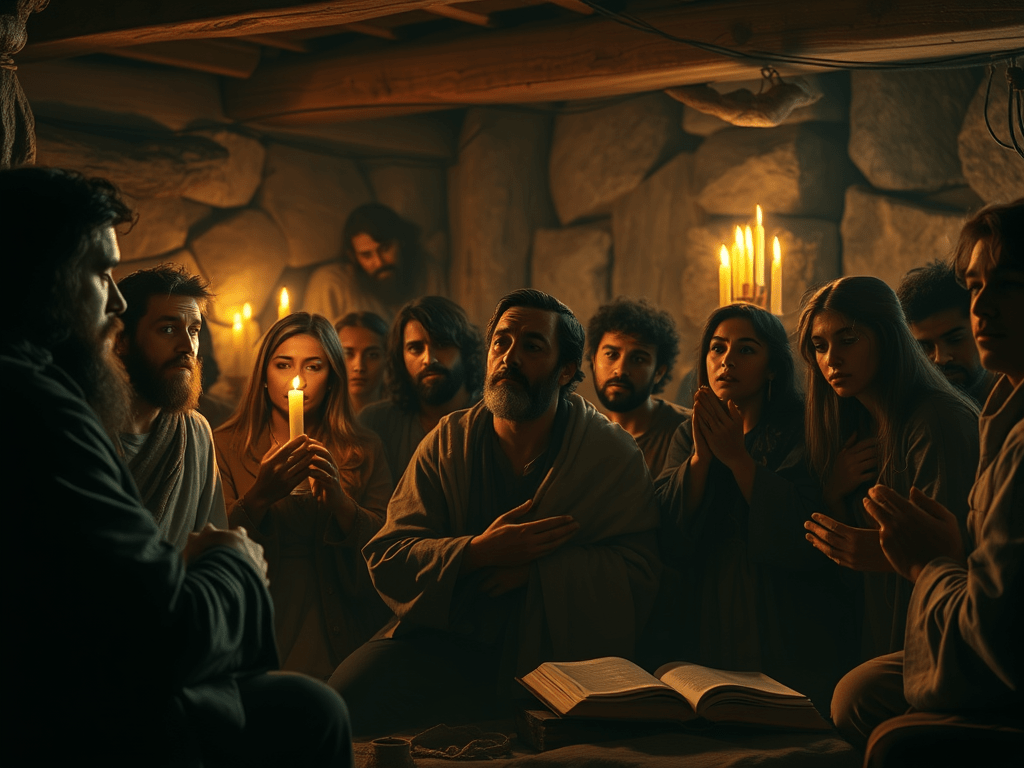
The disciples devoted themselves to prayer with one accord. This wasn’t casual or sporadic prayer, but a deep, consistent communion with God. They understood that prayer was as essential as breathing, a vital lifeline to the Father. In our fast-paced world, it’s easy to relegate prayer to brief moments before meals or bedtime. But the early church challenges us to make prayer the foundation of everything we do.
Imagine the scene: 120 people, including those who had walked closest with Jesus, united in fervent prayer. They weren’t just going through the motions; they were actively seeking God’s guidance and strength for the mission ahead. This level of dedication to prayer set the stage for the powerful move of God that was to come.
2. Relying on Scripture
Even before the New Testament was written, the disciples turned to the Old Testament scriptures for guidance and understanding. Peter, in particular, stood up among the believers and began teaching from the Psalms, showing how the scriptures pointed to Jesus and even foretold Judas’ betrayal.
This reliance on God’s Word wasn’t just about gaining knowledge. It was about finding direction for their next steps. They looked to scripture to discern God’s will, even in matters not explicitly commanded. When faced with the need to replace Judas, they turned to the Old Testament for guidance on the qualifications and process.
In our own lives, how often do we consult God’s Word before making decisions? The early church’s example challenges us to make scripture our go-to source for wisdom and direction in every aspect of life.
3. Focused on the Mission
Jesus had given His followers a clear mission: to be His witnesses to the ends of the earth. Even in this waiting period, the disciples didn’t lose sight of this calling. They were already preaching and teaching, with the group growing to 120 before Pentecost.
Their focus on the mission is particularly evident in their approach to choosing Judas’ replacement. They set clear, mission-focused criteria: the candidate must have been with them from Jesus’ baptism to His ascension, a witness to His entire ministry and resurrection. Out of 120 people, only two met these requirements.
This reminds us that our primary focus should always be on the mission God has given us. It’s easy to get caught up in our own concerns and comfort, but the early church challenges us to keep our eyes on the bigger picture of God’s kingdom work.
The selection of Matthias to join the eleven apostles is a beautiful picture of seeking God’s will. The disciples prayed, acknowledging God as the one who knows all hearts, and asked Him to show which man He had chosen. They used the method of casting lots, trusting God to reveal His choice through this means.
This story challenges us to seek God’s will above our own preferences or human wisdom. It’s a reminder that God often works in ways we don’t expect, choosing people we might overlook.
As we reflect on these lessons from the early church, we’re confronted with some challenging questions:
– Is our prayer life as consistent and devoted as it should be?
– Do we rely on God’s Word to guide our decisions and shape our worldview?
– Are we focused on the mission God has given us, or easily distracted by our own concerns?
The beauty of the gospel is that even when we fall short in these areas, Jesus’ perfect life and sacrificial death cover our failures. He lived the life of perfect prayer, perfect obedience to Scripture, and perfect focus on His mission that we could never achieve on our own.
This grace doesn’t excuse us from striving to grow in these areas, but it does free us from the burden of perfection. We can pursue a deeper prayer life, a greater reliance on Scripture, and a sharper focus on our mission, not out of guilt or fear, but out of love and gratitude for what Christ has done for us.
In a world that encourages self-focus and personal truth, the example of the early church calls us to a radically different way of living. It invites us to see our lives not as a playground for our own desires, but as a mission field where we can make disciples and glorify God.
Whether in good health or illness, financial abundance or scarcity, our main focus can be the mission God has graciously given us. One of life’s greatest blessings is the opportunity to wrap our arms around someone who needs Jesus and share the hope of the gospel with them.
As we go about our daily lives – at home, at work, in our communities – may we be inspired by the early church’s example. Let us be a people rooted in prayer, relying on God’s Word, and focused on the mission of making disciples. In doing so, we participate in God’s grand plan of restoration for this broken world, offering hope and pointing others to the love of Christ.


 Diary of a Sinner
Leave a comment